


From Commercial to Industrial: Data Center Development Is Evolving
Over the decades in mission-critical cooling, we’ve seen the data center industry evolve through periods of transformation. None, however, compares to what the industry is experiencing today.
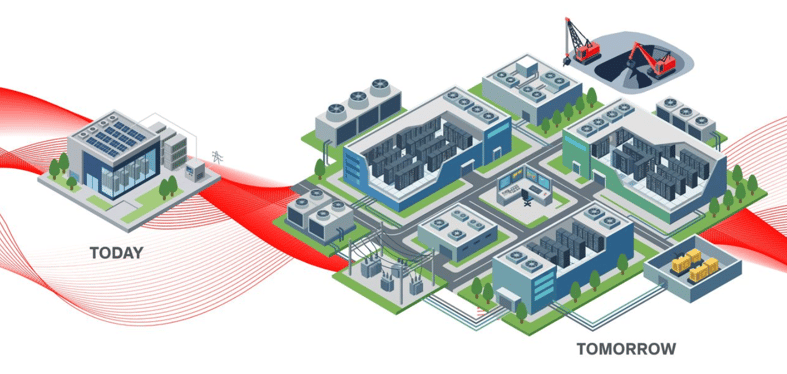
As AI adoption accelerates and digital infrastructure expands, the industry is making a fundamental shift from commercial-scale projects to industrial-scale development. That transition is more than building larger facilities. It changes how organizations think about planning, engineering, manufacturing, risk, and ultimately, strong partnerships.
Whenever an industry moves at this kind of velocity, complexity increases. New technologies emerge; project scales grow, timelines compress, and more organizations enter the market with fresh ideas and new approaches. That is healthy for innovation, and at the same time it introduces new challenges.
Successfully navigating this evolving landscape requires trusted partnerships that combine decades of experience with a willingness to embrace new thinking.
The future of data center development will not be completely defined by a single technology or design philosophy. It will be shaped by how effectively all the owners, engineers, contractors, manufacturers, and technology partners work together from the earliest stages of every project.
It’s your environment, your climate, and it is our mission to engineer for it by engaging early and often, holistically across functions.
Industrialization Is More Than Building Bigger Data Centers
When people talk about the growth of the data center industry, the conversation often centers around scale. Individual facilities continue to grow larger, while campuses supporting hundreds of megawatts of capacity are becoming increasingly common.
But industrialization is about more than square footage or power capacity.
Industrial facilities are designed around long-term operational resilience, repeatable processes, integrated infrastructure, supply chain planning, and lifecycle performance. Increasingly, those same principles define how modern data centers are conceived, designed, and delivered.
Instead of approaching each project as a standalone building, owners and developers are planning multi-building campuses, future expansion phases, utility coordination, manufacturing capacity, workforce availability, and long-term operational flexibility before the first shovel ever hits the ground. That changes the nature of every decision.
Mechanical systems influence electrical infrastructure. Cooling strategies affect building layouts. Utility availability impacts technology selection. Serviceability, commissioning, and future expansion all become part of the design conversation.
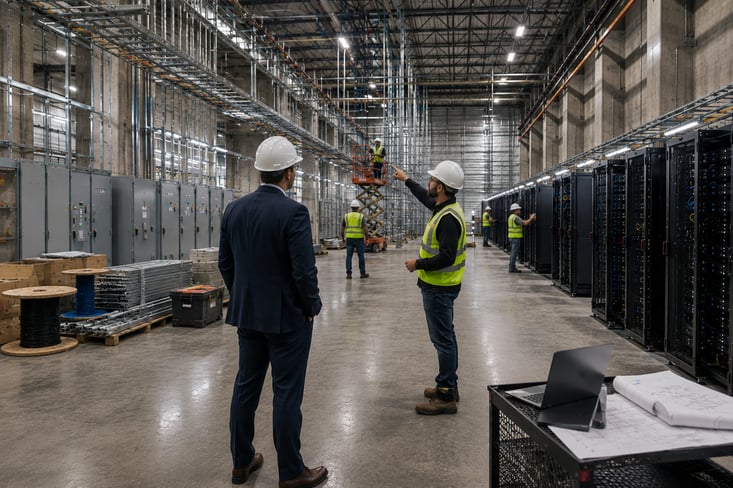
Nothing exists in isolation anymore.
The more industrial the industry becomes, the more interconnected every decision becomes in tandem.
Complexity Is Changing the Way Projects Are Delivered
Several major trends are reshaping the development landscape simultaneously. AI is driving unprecedented rack densities and thermal loads. Utility availability is influencing where new campuses can be built. Sustainability objectives continue to evolve. Construction schedules are under pressure while expectations for reliability continue to rise.
There are many priorities to consider.
Maximizing compute density, long-term flexibility, natural resource stewardship, operational efficiency, speed to market, geographic location, utility constraints, regulatory requirements, and future growth plans all influence the final solution.
This means there is no universal blueprint or one-size-fits-all approach for the next generation of data centers.
Rather than searching for a single "best" technology, project teams are evaluating combinations of technologies (in the critical cooling space, this looks like a hybrid strategy of air and liquid cooling solutions), that align with each facility's unique goals. The concept of standardized solutions is shifting. Today, success depends on understanding the broader operational objectives before equipment selections are made.
That is a significant change from where the industry has been.
Collaboration Starts Earlier Than Ever
One of the biggest changes STULZ has observed is when collaboration begins.
In the past, manufacturers were often brought into a project after many of the major design decisions had already been made. Today, we’re engaging with customers much earlier, often during the planning stages, to better understand each project’s unique goals, constraints, and long-term vision.
That is because no two data centers are exactly alike.
Every customer has different applications, growth strategies, density requirements, and operational priorities. Designing cooling infrastructure has become far more than selecting equipment that meets specifications. It's about understanding how cooling integrates into the larger ecosystem of the facility and supports both current operations and future expansion.
Meeting those needs requires a holistic approach.
Across STULZ, engineering, applications, product development, research and development, testing, manufacturing, and supply chain teams collaborate earlier and more frequently than ever before. Those conversations allow us to evaluate not only the cooling technology itself, but also how that solution fits within the broader infrastructure and helps customers navigate increasingly complex projects.
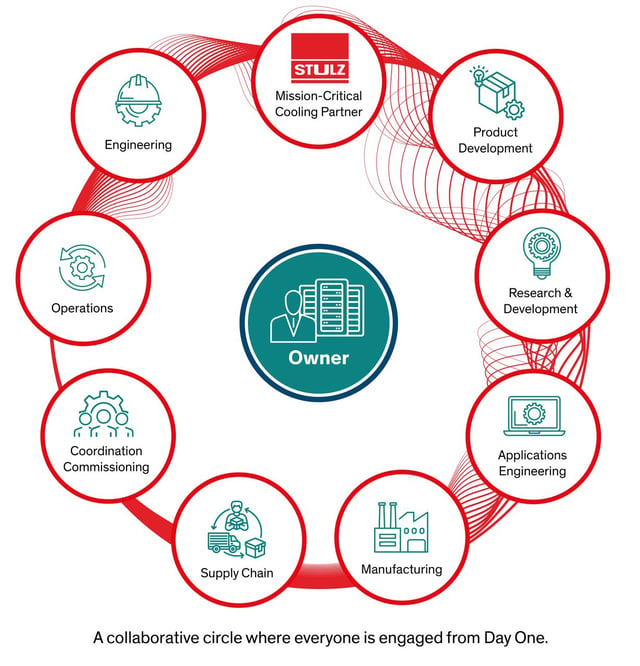
As facilities continue their transition toward industrial-scale infrastructure, early collaboration is becoming essential
Hybrid Cooling Reflects the Industry's Evolution
Cooling provides one of the clearest examples of how the data center industry is evolving.
For years, conversations often centered on choosing between air cooling and liquid cooling, as though one technology would eventually replace the other.
Reality has proven to be much more nuanced.
As higher-density AI workloads become more common, the industry is shifting toward liquid cooling. At the same time, air cooling remains an essential, highly effective solution across many mission-critical environments. Rather than viewing these technologies as competing approaches, many organizations are finding value in combining them to support different applications within the same facility.
At STULZ, we describe this transition as the hybrid wave of data center cooling.
Some deployments rely on liquid cooling only where the highest-density workloads require it, while maintaining proven air-cooled systems throughout the remainder of the white space. Others are implementing liquid cooling in phases as workloads evolve. Every application is different, and that's precisely why there is no one-size-fits-all solution.
Hybrid cooling reflects a broader trend occurring throughout the industry. Instead of asking which technology will "win," owners are asking how technologies can work together to achieve the best long-term outcome.
Answering that question requires early planning, open collaboration, and partners who understand how each decision affects the broader infrastructure.
Experience and Innovation Are Stronger Together
At STULZ, experience and innovation are not viewed as competing ideas. They are complementary strengths.
The data center industry is attracting talented professionals from a wide range of backgrounds, bringing fresh perspectives and creative solutions to some of its biggest challenges. That is good for the industry. New ideas have always been a driving force behind progress.
At the same time, experience provides context that only comes from navigating previous technology shifts and industry transitions.
STULZ has supported data centers through decades of cooling technologies, changing customer expectations, and entirely different approaches to facility design. Today’s AI factories and hyperscale campuses look very different from the data centers built decades ago. But one thing has not changed: every evolution introduces new opportunities alongside new risks.
That is why trusted partnerships matter more than ever.
As Brian Hatmaker, President of STULZ Air Technology Systems, has observed, “You can’t substitute for experience, but you also can’t ignore the incredible creativity and innovation entering our industry today.” The strongest outcomes come from bringing those perspectives together—pairing proven expertise with fresh thinking to develop solutions tailored to each customer’s unique application.
Organizations that have helped customers navigate years of technological change understand where challenges are likely to emerge, which questions need to be asked early, and how to balance innovation with the reliability that mission-critical environments demand.
That is where STULZ believes the best solutions are found.
Navigating the Next Era Together
The industrialization of the data center industry isn't a future prediction. It's already happening.
Projects are larger. Infrastructure is more interconnected. Timelines are shorter. Customer requirements are more specialized. The decisions made during planning have a greater impact than ever before on long-term performance, resiliency, and operational success.
Navigating this environment requires early conversation that spans disciplines and continues throughout the lifecycle of the project.
For mission-critical cooling, that means engaging experienced partners before equipment is specified, before designs are finalized, and before construction begins. It means bringing together the project’s key stakeholders and impacted teams to evaluate the facility as an integrated system rather than a collection of independent components.
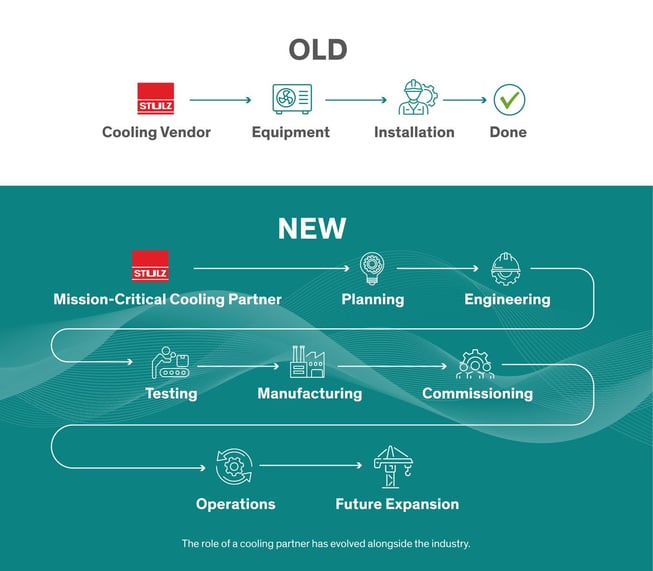
The future of our industry won't be built on standardized solutions because every deployment presents its own unique challenges and opportunities.
Better Together
At STULZ, we are optimistic about where the industry is headed.
The combination of decades of cooling experience, innovation, integration, and dialogue is creating opportunities to solve problems in ways the industry could not have imagined even a few years ago. As data center development continues its evolution from commercial to industrial, trusted partnerships will become one of the most important advantages organizations can have.
Technology will continue to evolve. But the opportunity for and value of trusted partnerships will remain. Together, we can navigate what’s next.
For a more in-depth conversation on the industrialization of data centers, watch our DCD Innovation Takeover Day session
Blog Comments